
Purchase diflucan best price online
- Is Diflucan available without prescription in the UK?
- What does Prescription Only Medicine mean in the UK?
- General information about fluconazole
- How Diflucan (fluconazole) works
- Price and availability information
- Strengths, formulations and pack types
- Indications: fungal infections and candidiasis
- UK legal classification: POM and import rules
- Alternatives to Diflucan
- Diflucan compared with other antifungal medicines
- Interactions with food, alcohol and other medications
- Side effects and tolerability
- Long-term use and resistance concerns
- Warnings, contraindications and interactions
- Additional information about Diflucan
Is Diflucan available without prescription in the UK?
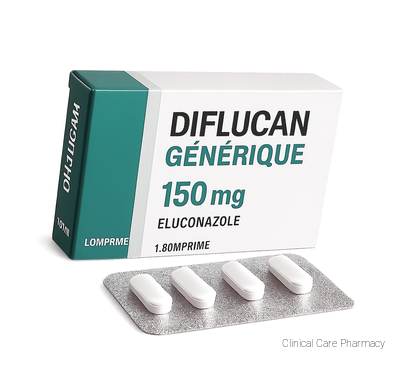
Diflucan, whose active ingredient is fluconazole, is classified as a Prescription Only Medicine (POM) in the United Kingdom. It cannot be supplied over the counter at pharmacies or via general retail outlets without a valid prescription from a UK-registered medical practitioner. Patients seeking Diflucan for fungal infections such as vaginal thrush, oral thrush or systemic candidiasis must obtain advice and a prescription from a doctor, nurse prescriber, or dentist. While some online pharmacies based outside the UK may advertise “no prescription required,” these imports are not legally endorsed for supply in Great Britain. Using unregulated sources can carry risks of counterfeit products, incorrect dosages, or substandard manufacturing. For safe, reliable access to generic Diflucan at a cheaper price, UK residents should secure a prescription and order from a regulated pharmacy like Clinical Care Pharmacy.
What does Prescription Only Medicine mean in the UK?
Prescription Only Medicine (POM) status indicates the highest level of professional oversight for medicines in the UK. The Medicines and Healthcare products Regulatory Agency (MHRA) determines that prescription control is necessary due to factors such as potency, safety profile, dosage complexity, risk of adverse events, and requirement for medical diagnosis. Healthcare professionals use their clinical judgment to ensure that Diflucan is appropriate for each patient’s particular fungal infection. POM classification also entails specific labelling, record-keeping, and patient information standards. Pharmacies dispensing POMs must verify the authenticity of prescriptions, counsel patients on correct usage, track supply records, and manage returns or recalls under legal guidelines. This framework helps to optimize therapeutic efficacy while minimizing the risk of resistance, side effects, or interactions.
General information about fluconazole
What is fluconazole?
Fluconazole is an antifungal medication belonging to the triazole class. It works by inhibiting the fungal cytochrome P450 enzyme lanosterol 14α-demethylase, which is necessary for converting lanosterol to ergosterol, a key component of the fungal cell membrane. Disruption of ergosterol synthesis compromises membrane integrity, leading to fungal cell death.
Origin and development
First synthesized in the early 1980s, fluconazole became widely available following regulatory approvals in the late 1980s and early 1990s. It was developed to offer broader-spectrum activity, improved oral bioavailability, and better safety compared with older antifungals such as ketoconazole and amphotericin B.
Common brand and generic forms
Diflucan is the most recognized brand name, but numerous generic fluconazole products are authorized in the UK after patent expiry. Generic versions are identical in active ingredient and meet the same regulatory efficacy and quality standards, though excipients and packaging may differ.
Pharmacokinetics overview
Fluconazole is well absorbed from the gastrointestinal tract, with bioavailability exceeding 90%. It has low protein binding and a long elimination half-life of approximately 30 hours, allowing once-daily dosing in most indications. Renal clearance is the primary elimination route, and dose adjustments are recommended in patients with significant renal impairment.
How Diflucan (fluconazole) works
Mechanism of action
Fluconazole selectively inhibits the fungal cytochrome P450 enzyme 14α-demethylase. By blocking this enzyme, ergosterol synthesis—essential for maintaining fungal cell membrane structure and function—is disrupted. The resulting increase in membrane permeability causes leakage of cellular contents and ultimately fungal cell death or growth inhibition.
Fungistatic versus fungicidal effects
At standard doses and in most superficial infections, fluconazole is largely fungistatic: it halts fungal growth, allowing the patient’s immune system to clear the infection. In certain systemic infections and with higher concentrations, fungicidal activity can occur.
Spectrum of activity
Fluconazole is active against multiple Candida species (e.g., Candida albicans, Candida tropicalis) and Cryptococcus neoformans. It has limited or no activity against molds such as Aspergillus species and some non-albicans Candida species that may display inherent or acquired resistance (e.g., Candida krusei).
Absorption and distribution
After oral administration, peak plasma concentrations are reached within 1 to 2 hours. Fluconazole distributes widely into body fluids including saliva, sputum, and cerebrospinal fluid, making it useful in certain cases of cryptococcal meningitis under specialist supervision.
Metabolism and excretion
Minimal hepatic metabolism occurs, and approximately 80% of a fluconazole dose is excreted unchanged in the urine. Dose adjustments are therefore required in patients with creatinine clearance below 50 mL/min to avoid accumulation and toxicity.
Price and availability information
How much does Diflucan cost in the UK?
Prices for fluconazole vary by pack size, dosage strength, brand versus generic status, and pharmacy retailer. As a prescription medicine, the cost can be influenced by NHS prescription charges or private prescription fees. Generic online pharmacies often offer lower out-of-pocket costs for private prescriptions, with discounts for larger pack sizes. Clinical Care Pharmacy can provide up-to-date price comparisons for different fluconazole products and suggest the cheapest generic options when you order online.
Factors influencing price
Bulk purchasing agreements, importation costs, packaging, and retail margin policies all play a role. Branded Diflucan typically commands a higher retail price compared to generic equivalents. Some pharmacies also offer loyalty programs or price matching to help patients access cost-effective treatment.
| Product | Strength | Pack Size | Price (GBP) | Status | Note |
|---|---|---|---|---|---|
| Generic Fluconazole | 50 mg | 14 tablets | £8.99 | Prescription Only | Generic, cheapest pack |
| Generic Fluconazole | 150 mg | 4 tablets | £12.49 | Prescription Only | Single-dose thrush treatment |
| Branded Diflucan | 150 mg | 1 tablet | £18.00 | Prescription Only | Branded pack |
Strengths, formulations and pack types
What strengths of fluconazole exist?
Fluconazole is commonly available in oral tablet strengths of 50 mg, 100 mg, and 150 mg. Intravenous formulations are also used in hospital settings for systemic infections, though these are not supplied OTC.
Oral presentation options
Tablets or capsules are coated for ease of swallowing. Some manufacturers supply oral suspension forms for pediatric or dysphagic patients. Generic liquid formulations vary in concentration and require precise measuring devices.
Why does pack size matter?
Different fungal indications and dosing regimens call for varying quantities. For example, a single 150 mg dose often treats vaginal thrush, while dermatophyte infections may require daily dosing over several weeks. Pack sizes from 1 up to 20 tablets are available, enabling clinicians to tailor therapy duration.
GMP and quality assurance
All UK-authorized fluconazole products must comply with Good Manufacturing Practice (GMP). Generic manufacturers supply approved Summary of Product Characteristics (SmPC) and patient information leaflets that may list different excipients but confirm the same active ingredient quantity.
Indications: fungal infections and candidiasis
Vaginal candidiasis (thrush)
The most frequent indication is uncomplicated vaginal thrush. A single-dose regimen of 150 mg fluconazole tablets is often sufficient, although recurrent cases may need extended courses under medical supervision.
Oral candidiasis (thrush)
Oral thrush in adults and children can be treated with a typical dose of 50–100 mg daily for 7 to 14 days. Dosing depends on severity and patient immune status.
Oesophageal candidiasis
Severe oropharyngeal spread into the oesophagus requires higher doses (e.g., 200–400 mg daily) and longer durations (2–3 weeks) under specialist guidance.
Dermatophyte infections
Skin and nail fungal infections, including tinea pedis and onychomycosis, may be treated with fluconazole daily or weekly regimens over several weeks to months, depending on site and severity.
Systemic and prophylactic use
In hospital settings, fluconazole prophylaxis or treatment of systemic candidiasis is undertaken by infectious disease specialists. These uses are beyond OTC scope and rely on intravenous or high-dose oral protocols.
UK legal classification: POM and import rules
Prescription Only Medicine status
Diflucan is strictly POM in the UK. Pharmacies may not dispense fluconazole without a valid UK prescription signed by an authorised prescriber. Private patients pay a dispensing fee plus the medicine’s cost unless exempt or covered by a prescription prepayment certificate.
Personal importation regulations
Individuals may import fluconazole for personal use under the Human Medicines Regulations 2012, provided it is for personal treatment, quantities do not exceed a three-month supply, and it is not a controlled drug. The MHRA advises caution to ensure the source is reputable and the product genuine.
Electronic prescriptions and online pharmacies
Electronic prescription services (EPS) allow prescriptions to be sent securely to a nominated pharmacy. Regulated online pharmacies will verify the prescription, counsel patients via phone or secure questionnaire, and dispatch authorised products with appropriate documentation.
Alternatives to Diflucan
- Topical azoles: clotrimazole, miconazole (cream or pessary for vaginal thrush);
- Nystatin suspension or ointment for mucosal candida;
- Itraconazole for dermatophyte or resistant Candida infections;
- Voriconazole, posaconazole or amphotericin B under specialist care for resistant or systemic infections;
- Non-azole agents: terbinafine for nail dermatophytes.
Choice of agent depends on infection site, severity, patient allergies, interactions, and previous treatment response.
Diflucan compared with other antifungal medicines
| Feature | Fluconazole (Diflucan) | Itraconazole | Terbinafine |
| Drug class | Triazole | Triazole | Allylamine |
| Main mechanism | Inhibits ergosterol synthesis | Inhibits ergosterol synthesis | Inhibits squalene epoxidase |
| Oral bioavailability | High (~90%) | Variable, food-dependent | Good (~70%) |
| OTC availability in UK | No (POM only) | No (POM only) | No (POM only) |
| Common uses | Candida infections, cryptococcal meningitis | Broad dermatophyte coverage | Dermatophyte nail and skin infections |
No single antifungal is superior for all indications. The choice depends on organism sensitivity, site of infection, patient factors and safety profile.
Interactions with food, alcohol and other medications
Food interactions
Fluconazole absorption is not significantly affected by food, so dosing can occur with or without meals. Oral suspension may require gentle shaking before measuring.
Alcohol considerations
Alcohol does not reduce fluconazole efficacy but may compound hepatotoxic risk, particularly in heavy drinkers. Patients should limit alcohol intake during treatment and consult their prescriber if liver disease is present.
Drug–drug interactions
As a moderate inhibitor of cytochrome P450 enzyme CYP2C9, CYP2C19 and CYP3A4, fluconazole can increase plasma concentrations of warfarin, phenytoin, sulfonylureas, ciclosporin, and certain benzodiazepines. Clinicians may need to adjust doses of concomitant medications or monitor blood levels closely.
Acid-reducing agents
Proton pump inhibitors or H2 blockers do not significantly affect fluconazole absorption. No dose adjustment is required.
Side effects and tolerability
Common side effects
| Area | Examples |
| Gastrointestinal | Nausea, abdominal pain, diarrhoea |
| Neurological | Headache, dizziness |
| Hepatic | Elevated liver enzymes |
| Skin | Rash, pruritus |
Less common and serious effects
Rarely, fluconazole can cause severe hepatic injury, QT prolongation, arrhythmias, pancytopenia or hypersensitivity reactions. Patients must report jaundice, dark urine, unusual bleeding, palpitations or allergic symptoms immediately.
Tolerability profile
Overall tolerability is good, especially for short courses. Long-term or high-dose therapy necessitates periodic monitoring of liver function tests and complete blood count.
Long-term use and resistance concerns
Risks of prolonged therapy
Extended or repeated courses of fluconazole can select for resistant Candida species such as Candida glabrata and Candida krusei. Resistance mechanisms include target enzyme mutations and efflux pump overexpression.
Monitoring and stewardship
Antifungal stewardship programs promote targeted use: culture and sensitivity testing for recurrent or systemic infections, de-escalation to narrow-spectrum agents, and limiting prophylactic use to high-risk populations under specialist care.
Treatment failure and alternative options
If clinical response is inadequate or resistance emerges, alternative antifungal classes (echinocandins, amphotericin B) may be indicated. Specialist referral is essential for systemic or refractory cases.
Warnings, contraindications and interactions
Contraindications
- Known hypersensitivity to fluconazole or other azoles;
- Concurrent terfenadine, cisapride or astemizole (risk of QT prolongation);
- Long QT syndrome or cardiac arrhythmias;
- Severe hepatic impairment without specialist oversight.
Pregnancy and breastfeeding
Single-dose fluconazole for thrush in pregnancy is generally not recommended due to potential fetal risk. Topical azoles are preferred. For systemic maternal infections, specialist advice is required. Fluconazole is excreted in breast milk; benefits must be weighed against potential neonatal effects.
Drug interactions recap
Fluconazole’s inhibition of CYP450 enzymes mandates review of concurrent medications. Warfarin dose adjustments and INR monitoring are particularly important. Co-administration with other hepatotoxic drugs requires vigilance for liver toxicity.
Laboratory monitoring
Baseline liver function tests and full blood count may be recommended for high-dose or long-term therapy, and periodically thereafter in patients with risk factors.
Additional information about Diflucan
Generic versus branded
Generic fluconazole products meet the same regulatory standards for quality, safety and efficacy as the branded Diflucan, but may differ in excipients, tablet color and packaging. Cost savings can be substantial with generics.
Why check the SmPC?
The Summary of Product Characteristics details approved indications, dosage regimens, contraindications, interactions and side effects for each authorised product. Always refer to the correct SmPC or patient leaflet for specific information.
Where to verify UK medicine information?
Official resources include the MHRA website, the electronic Medicines Compendium (eMC), and clinical guidelines from NICE. For personalised advice, consult a qualified healthcare professional at Clinical Care Pharmacy.
Does this replace pharmacist advice?
No. This article is for general information only. For tailored recommendations, prescription queries or concerns about interactions and contraindications, please speak to our pharmacy team at Unit 4 Brian Clough Business Centre, 200-222 Cotton Lane, Derby.