
Buy clomid online cheap
- Is Clomid available without prescription in the UK?
- What does Prescription Only Medicine mean for Clomid?
- General information about Clomid
- How Clomid works to induce ovulation
- Price and purchase information
- Strengths, generic versus branded Clomid
- Clomid for fertility and other uses
- UK legal classification: POM and online ordering
- Alternatives and complementary therapies
- Clomid compared with letrozole and other agents
- Lifestyle, diet and monitoring during treatment
- Side effects and tolerability of Clomid
- Long-term use, cycles limit and supervision
- Warnings, contraindications and interactions
- Additional information about buying Clomid online
Is Clomid available without prescription in the UK?
Clomid (clomiphene citrate) is a prescription only medicine in the United Kingdom, meaning it cannot be legally supplied without a valid prescription from a qualified healthcare professional. However, many patients seek to purchase Clomid online without prescription. This practice involves sourcing generic Clomid from international online pharmacies that claim to offer cheaper and fast delivery to the UK. While online purchase of fertility treatments may seem more affordable, ordering Clomid without prescription poses legal, safety and quality risks. Patients should be aware that buying prescription-only medications online without a valid prescription bypasses UK regulatory safeguards, potentially exposing them to counterfeit or substandard products.
Despite these considerations, Clinical Care Pharmacy provides comprehensive information on how to safely order Clomid online, discussing potential price advantages, generic options, reliable suppliers, and quality assurance steps. Patients are encouraged to consult with a pharmacist or fertility specialist before initiating any treatment, even when purchasing generics online.
What does Prescription Only Medicine mean for Clomid?
In the UK, Prescription Only Medicine (POM) classification indicates that a medicine must be dispensed by a pharmacist following a valid prescription issued by an authorised prescriber, such as a doctor, dentist or nurse practitioner. Clomid’s POM status reflects its established clinical uses, dosing complexity, monitoring requirements, and potential for side effects or interactions. Pharmacies dispense Clomid only after verifying prescription details and patient suitability, ensuring that necessary monitoring and follow-up are arranged.
Purchasing Clomid online without prescription circumvents these professional checks. Consequently, patients miss the opportunity for personalised dose adjustments, cycle monitoring via ultrasound or hormone tests, and timely management of adverse reactions. While online sellers may advertise “without prescription” services, professionally supervised prescription pathways remain the safest means to access Clomid in the UK.
General information about Clomid
What is Clomid?
Clomid is the brand name for clomiphene citrate, a non-steroidal fertility medication used primarily to induce ovulation in women who do not ovulate regularly but wish to conceive. First synthesised in the 1950s, Clomid has become a cornerstone in assisted reproductive treatments, often used as first-line therapy for anovulatory infertility associated with polycystic ovary syndrome (PCOS) and other ovulatory disorders.
Active ingredient and mechanism class
The active pharmaceutical ingredient clomiphene citrate is classified as a selective estrogen receptor modulator (SERM). By competitively blocking estrogen receptors in the hypothalamus, Clomid disrupts negative feedback of endogenous estrogen, leading to increased release of gonadotropin-releasing hormone (GnRH), luteinising hormone (LH) and follicle stimulating hormone (FSH), which together stimulate ovarian follicular development and ovulation.
Generic versus branded Clomid
Generic clomiphene citrate contains the same active ingredient at the same dosage strength as branded Clomid but may differ in inactive excipients, tablet appearance and packaging. All generics authorised by reputable regulatory authorities must meet stringent quality, safety and efficacy standards equivalent to the branded reference product.
Indications and off-label uses
The primary licensed indication for Clomid is ovulatory dysfunction. Off-label uses have included treatment of unexplained infertility, male factor infertility with hypogonadism, and adjunctive therapy in in vitro fertilisation (IVF) protocols. Strong clinical evidence supports its fertility-enhancing effects when used under appropriate medical supervision.
How Clomid works to induce ovulation
Estrogen receptor modulation
Clomiphene citrate binds estrogen receptors in the hypothalamus, mimicking low estrogen conditions. This triggers a cascade: the hypothalamus signals the pituitary to release FSH and LH, hormones critical for follicular growth and ovulation. The increase in FSH promotes development of ovarian follicles, while the surge in LH facilitates ovulation.
Follicular phase stimulation
In a typical 5-day Clomid regimen, 50–100 mg daily initiates follicular recruitment. Monitoring via transvaginal ultrasound and serum estradiol levels helps optimise dosage, ensuring one or more mature follicles develop without risking ovarian hyperstimulation or multiple pregnancies.
Comparison with natural cycles
Natural ovulation relies on endogenous estrogen feedback loops. Clomid artificially modulates these loops, shortening follicular recruitment time in women with irregular cycles. It does not change the fundamental endocrine pathway but amplifies signals to improve ovulatory frequency and predictability.
Duration of action and half-life
Clomiphene has a long elimination half-life (5–7 days), resulting in lasting receptor modulation beyond the dosing period. This prolonged action can influence subsequent cycles and occasionally leads to side effects such as hot flushes or visual disturbances.
Price and purchase information
How much does Clomid cost online?
Online prices for Clomid vary widely. Generic clomiphene citrate may be available from £15 to £30 for a 10-tablet pack of 50 mg doses when purchased without prescription from international pharmacies. Branded Clomid prices in UK pharmacies under prescription typically range from £60 to £120 per pack, reflecting prescription dispensing fees, professional consultation and local taxation.
Why are online prices cheaper?
International online pharmacies often operate in markets with lower manufacturing or distribution costs, fewer regulatory fees, and high-volume direct-to-consumer models. These factors allow them to offer lower unit prices, although they may compromise on legal compliance, local quality assurance, and continuity of supply.
| Supplier | Product | Pack size | Price (GBP) | Prescription | Notes |
|---|---|---|---|---|---|
| ExampleOnline | Clomiphene citrate generic | 10 × 50 mg | £18.99 | Without prescription | International shipping, 7–14 days |
| UKPharmacy | Clomid branded | 10 × 50 mg | £75.00 | Prescription only | Next-day delivery in UK |
Prices are indicative and subject to change. Patients should verify current offers, shipping terms, customs duties, and any hidden fees when ordering online.
Strengths, generic versus branded Clomid
Available strengths
Clomid is commonly available as 50 mg tablets. Some generics may offer 25 mg strength or scored tablets to facilitate dose adjustment, although lower-strength presentations are less common and typically require compounding.
Generic formulations
Generic tablets may vary in inactive composition, colouring agents and tablet coatings. Differences can affect dissolution rate, yet bioequivalence trials ensure therapeutic equivalence to the branded product.
Branded product presentation
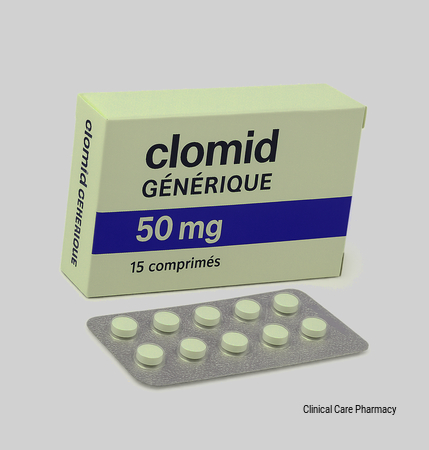
Branded Clomid tablets are oval, yellow-orange, imprinted with “CLOMID 50 mg.” Pack sizes include 5, 10 or 25 tablets. Patient information leaflets specify dosing schedules, potential side effects, monitoring requirements and storage conditions.
Pack size considerations
Pack size may influence retail classification and prescription fees. In a prescription setting, larger packs can reduce per-tablet cost but may exceed typical 5-day regimens, thus requiring careful prescribing to avoid wastage and misuse.
Clomid for fertility and other uses
Primary use: ovulation induction
Clomid is indicated for women with oligomenorrhoea or amenorrhoea due to anovulation. Clinical trials demonstrate ovulation rates of 60–85% and pregnancy rates of 30–40% per cycle in responsive populations.
Male infertility
Low-dose Clomid regimens (25 mg daily) have been used off-label in men with idiopathic oligospermia or hypogonadotrophic hypogonadism. By increasing GnRH and gonadotropins, Clomid may enhance testosterone and spermatogenesis.
Adjunct in ART
Clomid is sometimes combined with gonadotropin injections in assisted reproductive technologies (ART) to reduce gonadotropin doses and costs, although this practice requires specialist oversight to avoid under- or overstimulation.
Emerging investigational uses
Research has explored Clomid’s potential in conditions such as male osteoporosis, androgen deficiency in aging men, and premenstrual syndrome, though these uses remain off-label pending more robust clinical data.
UK legal classification: POM and online ordering
Prescription Only Medicine (POM)
Clomid falls under POM, restricting supply to pharmacies only upon receipt of a valid prescription. This ensures healthcare professional involvement in patient selection, dosing, cycle monitoring, and side effect management.
Ordering Clomid online without prescription
While UK-based pharmacies cannot legally dispense Clomid without prescription, international online vendors may advertise direct supply. Patients considering this route should verify the vendor’s regulation status (e.g., registration with local health authorities), packaging authenticity, and batch testing certificates.
Risks of unregulated suppliers
Counterfeit or substandard Clomid may contain incorrect active content, harmful contaminants, or inconsistent dissolution profiles. Unregulated supply raises safety concerns and may lead to treatment failure or unexpected toxicities.
Advice from Clinical Care Pharmacy
We recommend patients obtain a legitimate prescription through telemedicine or local clinics, then purchase Clomid from a UK-registered pharmacy like Clinical Care Pharmacy to ensure product quality, correct dosing, and professional follow-up.
Alternatives and complementary therapies
Letrozole (Femara)
An aromatase inhibitor often used off-label for ovulation induction. Letrozole may yield higher live birth rates in some PCOS populations compared to Clomid, but individual response varies.
Gonadotropin injections
Human menopausal gonadotropins (hMG) and recombinant FSH provide direct follicular stimulation. They require intensive monitoring to reduce multiple pregnancy risk and ovarian hyperstimulation syndrome (OHSS).
Metformin adjunct
Metformin improves insulin sensitivity and may restore regular ovulation in women with PCOS when combined with Clomid, potentially reducing cancellation rates and side effects.
Lifestyle interventions
Weight management, dietary optimisation, stress reduction, acupuncture and complementary therapies have been studied as adjuncts to pharmaceutical ovulation induction but require further evidence for routine recommendation.
Clomid compared with letrozole and other agents
| Feature | Clomid | Letrozole | Gonadotropins |
| Class | SERM | Aromatase inhibitor | FSH/LH analogues |
| Mechanism | Blocks estrogen receptors | Inhibits estrogen synthesis | Directly stimulates ovaries |
| Ovulation rate | 60–85% | 60–80% | 75–90% |
| Pregnancy rate | 30–40% | 35–45% | 40–60% |
| Multiple pregnancy risk | 5–10% | 3–8% | 15–30% |
| Monitoring | Moderate | Moderate | Intensive |
| Cost per cycle | Low | Low–moderate | High |
No single agent is superior in all cases; treatment selection depends on patient characteristics, prior response, side effect tolerability, cost, and specialist recommendation.
Lifestyle, diet and monitoring during treatment
Dietary considerations
Balanced nutrition supports reproductive health. Adequate protein, healthy fats, low glycaemic index carbohydrates, vitamins D and B12, folic acid and omega-3s may optimise follicular environment and endometrial receptivity.
Alcohol and smoking
Excessive alcohol intake is discouraged during fertility treatment. Smoking negatively affects ovarian reserve and endometrial function; cessation is strongly advised.
Body weight and exercise
Maintaining a healthy BMI (18.5–25 kg/m²) improves ovulation rates. Regular moderate exercise can enhance insulin sensitivity but avoid extreme physical stress, which may disrupt hormonal balance.
Monitoring protocols
Ultrasound scans to assess follicle growth, endometrial thickness and serum estradiol testing guide dose adjustments. Regular follow-up ensures timely detection of excessive response or suboptimal stimulation.
Side effects and tolerability of Clomid
| Area | Possible effects |
| Vasomotor | Hot flushes, sweating |
| Visual | Blurred vision, scotomata (rare) |
| Psychological | Mood swings, irritability, depression (rare) |
| Breast | Tenderness, enlargement |
| Gynaecological | Ovarian enlargement, discomfort |
| Hypersensitivity | Allergic rash, urticaria (rare) |
Most side effects are mild and transient. Serious adverse events such as ovarian hyperstimulation syndrome (OHSS) occur in less than 1% of cycles when properly monitored.
Long-term use, cycles limit and supervision
Cycle limit recommendations
Guidelines typically limit Clomid to six ovulatory cycles due to diminishing returns and theoretical risks such as ovarian cyst formation. Beyond six cycles, alternative treatments or diagnostic reassessment are recommended.
Ovarian hyperstimulation syndrome
OHSS risk is low with Clomid but can occur, especially when combined with gonadotropins. Clinical features include abdominal pain, bloating, rapid weight gain and, in severe cases, ascites or thromboembolism.
Monitoring long-term effects
No clear association exists between Clomid use and ovarian cancer or congenital anomalies when used under supervision. However, periodic ultrasound and clinical reviews help ensure safety and efficacy.
Warnings, contraindications and interactions
Contraindications
- Known hypersensitivity to clomiphene citrate;
- Primary ovarian failure or gonadal dysgenesis;
- Uncontrolled thyroid or adrenal dysfunction;
- Pregnancy or breastfeeding;
- Hepatic impairment;
- Abnormal uterine bleeding of unknown origin.
Drug interactions
Clomid has minimal cytochrome P450 interactions but may alter estrogen-metabolising pathways. Concomitant use with high-dose estrogen therapies is contradictory to its mechanism and should be avoided.
Warning symptoms
Sudden vision changes, severe pelvic pain, signs of OHSS or unusual bleeding require immediate medical assessment.
Additional information about buying Clomid online
Choosing a reputable online pharmacy
Verify pharmacy accreditation (e.g., GPhC registration in the UK or equivalent in other jurisdictions), secure payment options, clear contact details and accessible customer support. Look for third-party quality seals and customer reviews.
Generic versus branded purchasing
Generic Clomid offers cost savings; branded Clomid ensures consistent packaging and known origin. Both are effective if sourced from licensed suppliers.
Legal and customs considerations
Importing prescription medicines without a prescription may contravene UK law and risk seizure by customs. Patients should understand import regulations, potential duties and personal use allowances before ordering.
Storage and handling
Store Clomid tablets at room temperature (15–25°C), away from moisture and direct light. Keep in original packaging until use to protect product integrity.
Consult professional advice
This information is provided by Clinical Care Pharmacy for educational purposes. It does not replace personalised medical advice. Always consult a healthcare professional before starting or altering Clomid treatment.