
Purchase clomid fast delivery generic
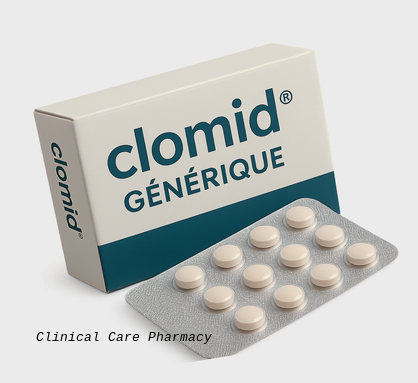
- Can I buy Clomid without prescription in the UK?
- What does generic medicine mean in the UK?
- What is clomiphene citrate?
- How Clomid works to induce ovulation
- Price and availability information
- Strengths, formulations and pack sizes
- Use in female infertility and ovulation induction
- UK legal classification: POM, P and GSL
- Alternatives for fertility treatment
- Clomid compared with other fertility medicines
- Food, lifestyle and fertility considerations
- Side effects and tolerability
- Long-term use and safety considerations
- Warnings, contraindications and interactions
- Additional information about Clomid
Can I buy Clomid without prescription in the UK?
Clomid (clomiphene citrate) is a specialist fertility medicine traditionally supplied as a Prescription Only Medicine (POM) in the UK. However, online pharmacies like Clinical Care Pharmacy operate under specific frameworks that allow UK residents to order generic Clomid without presenting a physical prescription, subject to a professional telephone or online consultation. This service is strictly regulated and requires evaluation of medical history, fertility status and contraindications before supply. While Clomid is not a General Sales List product you can pick up at a supermarket, it can be purchased without a paper prescription by following the pharmacy’s ordering process, which includes screening questions and professional oversight by UK-registered pharmacists.
The notion of “without prescription” in an online pharmacy context means you do not need to physically visit a GP or hospital to obtain a signed script. Instead, you provide your details through a secure online form, answer targeted clinical questions about your fertility history, medical conditions and concomitant medications, and then the pharmacist reviews your case. Approved orders are sent directly to your door or local postal address in compliance with UK regulations. This streamlined approach to buying generic Clomid online meets legal requirements while offering faster access, secure payments and discreet packaging.
Please note that self-diagnosis and unsupervised use of Clomid can carry risks. Despite the convenience of ordering without prescription, you should always be under medical supervision and have had appropriate investigations such as ultrasound monitoring and hormone profiling where indicated. Clinical Care Pharmacy provides guidance, sample tracking and after-sales support to ensure safe and effective use of Clomid as part of your fertility journey.
What does generic medicine mean in the UK?
Generic medicines are versions of brand-name drugs that contain the same active pharmaceutical ingredient (API), in this case clomiphene citrate, at the same strength, dosage form and route of administration. Before they can be marketed in the UK, generics must demonstrate bioequivalence to the original reference product, meeting the Medicines and Healthcare products Regulatory Agency (MHRA) standards for quality, safety and efficacy. Generic Clomid is typically more affordable than branded treatments because manufacturers do not incur the original drug discovery and development costs.
Key points about generics in the UK:
- Same active ingredient and strength as the branded medicine.
- Similar pharmacokinetic profile (absorption, distribution, metabolism, excretion).
- Approved by MHRA following rigorous testing.
- May differ in excipients, tablet appearance and packaging.
- Offers cost savings, often reflected in lower retail prices.
Although generics may look different from the brand product, clinical performance and safety are equivalent when properly regulated. Purchasing generic Clomid from a reputable online pharmacy in the UK ensures you receive a product that matches recognised quality and regulatory standards.
What is clomiphene citrate?
Pharmacological profile
Clomiphene citrate is a selective oestrogen receptor modulator (SERM) that has been used for over four decades to treat ovulatory dysfunction in women who wish to conceive. It is sometimes referred to by the brand name Clomid, Serophene or Milophene, depending on the manufacturer.
Mechanism of action overview
Clomiphene works by blocking oestrogen receptors in the hypothalamus, tricking the body into thinking oestrogen levels are low. This stimulates the hypothalamic-pituitary-gonadal axis, leading to the release of gonadotrophins—luteinising hormone (LH) and follicle-stimulating hormone (FSH)—which in turn promote follicular development and ovulation in the ovaries.
Therapeutic indications
The primary UK-licensed indication for Clomid is the induction of ovulation in anovulatory women desiring pregnancy. It may also be used off-label in male infertility to improve sperm parameters, though this requires specialist oversight.
History and clinical use
First synthesised in the early 1960s, clomiphene citrate quickly became a cornerstone of fertility treatment due to its oral route, relatively favorable safety profile and good efficacy rates for inducing ovulation in polycystic ovary syndrome (PCOS) and other ovulatory disorders.
How Clomid works to induce ovulation
Hypothalamic oestrogen receptor blockade
Clomiphene competes with endogenous oestrogens for receptor binding in the hypothalamus and pituitary. By reducing negative feedback, it increases gonadotrophin-releasing hormone (GnRH) pulsatility, which then elevates FSH and LH secretion from the pituitary gland.
FSH-driven follicular recruitment
Elevated FSH levels stimulate the growth of ovarian follicles in the early to mid-follicular phase of the menstrual cycle. Typically, 1–2 dominant follicles mature, preparing for the LH surge that triggers ovulation.
LH surge and ovulation
The LH surge, which occurs around mid-cycle, prompts follicular rupture and the release of a mature oocyte. Successful ovulation is critical for fertilisation and conception.
Monitoring and cycle timing
Effective use of Clomid involves cycle monitoring, often with basal body temperature charts, urinary LH test kits or ultrasound scans to confirm follicular development and the timing of ovulation.
Response variability
Individual response to Clomid varies according to age, ovarian reserve, body mass index (BMI) and baseline hormonal status. A typical ovulation induction protocol starts with 50 mg daily for five days, adjusted in subsequent cycles if needed.
Price and availability information
How much does generic Clomid cost in the UK?
Prices for clomiphene citrate can vary considerably between online pharmacies, brick-and-mortar chemists and specialists. Generic Clomid typically ranges from £15 to £50 for a standard pack of 10–12 tablets, depending on dosage, branding and retailer promotions. Clinical Care Pharmacy offers competitive prices, bulk discounts and seasonal offers to ensure cheaper access compared with branded alternatives.
Why do prices vary?
Factors influencing retail price include:
- Manufacturer and sourcing costs.
- Pack size and tablet count.
- Dosage strength (e.g. 25 mg vs. 50 mg tablets).
- Promotional discounts and bulk purchase offers.
- Distribution and shipping fees for fast delivery.
Order directly online to compare prices, benefit from special deals and avoid mark-ups from clinical fertility centres.
| Example Product | Strength | Pack Size | Price (GBP) | Status | Note |
|---|---|---|---|---|---|
| Clomiphene 25 mg | 25 mg | 10 tablets | £18.99 | In stock | Generic fast dispatch |
| Clomiphene 50 mg | 50 mg | 12 tablets | £24.50 | In stock | Buy 2 get 1 free offer |
| Branded Clomid | 50 mg | 10 tablets | £45.00 | Limited | Prescription required |
Strengths, formulations and pack sizes
What strengths of Clomid exist?
Clomiphene citrate is commonly available in 25 mg and 50 mg tablets. Treatment regimens often start at 50 mg daily for five days, but some regimens may use 25 mg increments if dose adjustments are needed. Each tablet contains the stated amount of active ingredient alongside excipients that vary by manufacturer.
What formulations are available?
Clomid tablets are oral, immediate-release formulations. There are no gastro-resistant or extended-release versions. Tablets are scored for ease of splitting dosage when adjusting regimens under professional advice.
Why does pack size matter?
Pack sizes typically range from 10 to 20 tablets, covering two to four cycles depending on prescribed dosage. Bulk packs can reduce per-tablet costs and ensure uninterrupted treatment over multiple cycles.
| Feature | Why it matters |
| Strength | Determines dose per tablet |
| Pack size | Impacts treatment duration and cost |
| Manufacturer | Affects excipients and packaging |
| Generic vs. branded | Cost and availability differences |
Always confirm the strength and tablet count when ordering to match your treatment plan.
Use in female infertility and ovulation induction
Indications
Clomid is indicated for women with anovulatory or oligo-ovulatory cycles, including those with PCOS, hypothalamic amenorrhoea and unexplained infertility associated with ovulatory dysfunction.
Protocol
A common protocol involves starting 50 mg daily from day 2 to day 6 of the menstrual cycle. If ovulation is not achieved, the dose may be increased to 75 mg or 100 mg in subsequent cycles under supervision.
Monitoring
Ultrasound scans track follicle growth, while hormonal assays measure oestradiol levels. Ovulation predictor kits or basal body temperature charts help time intercourse or insemination.
Success rates
Ovulation rates exceed 80% in many cohorts, with pregnancy rates of 40–50% over six cycles. Success depends on age, BMI, ovarian reserve and adherence to monitoring protocols.
Male infertility use
Off-label, Clomid can be prescribed to men with hypogonadism to improve sperm count and testosterone levels. This requires endocrinology or urology oversight.
UK legal classification: POM, P and GSL
What is a POM?
Prescription Only Medicines (POM) require a valid prescription from a qualified prescriber. Clomid is classified as POM in the UK due to potential risks and the need for monitoring.
What is a Pharmacy medicine (P)?
Pharmacy medicines can be sold without a prescription but only under pharmacist supervision. Clomid is not a P medicine.
What is a GSL medicine?
General Sales List medicines can be sold anywhere without pharmacist oversight. Clomid does not qualify due to its specialist use.
Why is Clomid POM?
Clomiphene citrate can cause multiple pregnancy, ovarian hyperstimulation syndrome (OHSS) and other complications if misused. Accurate dosing, cycle monitoring and contraindication screening are essential.
Who regulates?
The MHRA regulates medicine classification, safety updates and reclassification procedures in the UK.
Alternatives for fertility treatment
Other ovulation induction options:
- Letrozole (aromatase inhibitor);
- Gonadotrophin injections (FSH, HMG);
- Metformin in PCOS-associated anovulation;
- Intrauterine insemination (IUI) protocols;
- Assisted reproductive technologies (ART) including IVF.
Each alternative has specific indications, costs and monitoring requirements. Letrozole has shown comparable efficacy to Clomid in some PCOS populations but may have different side effect profiles.
Clomid compared with other fertility medicines
Clomid vs. Letrozole
Letrozole reduces oestrogen production by inhibiting aromatase, while Clomid blocks oestrogen receptors. Studies suggest similar pregnancy rates, but letrozole may yield fewer multiple pregnancies.
Clomid vs. Gonadotrophins
Injectable gonadotrophins produce more robust follicular response but carry higher risk of OHSS and require daily injections and intensive monitoring.
| Feature | Clomid | Letrozole | Gonadotrophins |
| Administration | Oral | Oral | Injection |
| Monitoring | Moderate | Moderate | Intensive |
| OHSS risk | Low | Low | High |
| Multiple pregnancy risk | 10–15% | 5–10% | 20–30% |
Food, lifestyle and fertility considerations
Dietary factors
A balanced diet rich in antioxidants, folic acid, vitamin D and omega-3 fatty acids may support ovulatory function and overall reproductive health.
Weight management
Optimal BMI (18.5–24.9 kg/m²) correlates with better Clomid response and pregnancy rates. Both obesity and underweight can impair ovulation.
Alcohol and caffeine
Moderation of alcohol and caffeine is recommended, as excessive intake can affect fertility outcomes. Aim for less than 200 mg caffeine per day.
Exercise
Regular moderate exercise supports insulin sensitivity and hormonal balance. Excessive high-intensity training, however, may suppress ovulation.
Stress management
High stress levels can impact the hypothalamic-pituitary axis. Mindfulness, counselling and relaxation techniques may improve treatment experience.
Side effects and tolerability
Common side effects
| Area | Examples |
| Vasomotor | Hot flushes, flushing |
| Neurological | Headache, dizziness |
| Gastrointestinal | Nausea, bloating, abdominal discomfort |
| Visual | Blurred vision, photophobia (reversible) |
| Psychiatric | Mood swings, irritability |
Most side effects are mild and transient. Visual disturbances require immediate cessation of therapy and prompt medical review.
Rare but serious effects
- Ovarian hyperstimulation syndrome (OHSS);
- Thromboembolic events;
- Severe allergic reactions;
- Depression or anxiety exacerbation.
Monitor for abdominal pain, rapid weight gain, respiratory symptoms or mental health changes. Seek urgent medical advice if severe reactions occur.
Long-term use and safety considerations
Clomid is licensed for short-term ovulation induction, typically up to six cycles. Extended use beyond six cycles is generally not recommended without specialist review due to diminishing returns and increased risk of ovarian enlargement or neoplasia. Long-term fertility treatment plans may incorporate alternative therapies, ultrasound surveillance and periodic hormone level assessments to ensure ongoing safety and efficacy.
Warnings, contraindications and interactions
Key contraindications:
- Pregnancy or breastfeeding;
- Uncontrolled thyroid or adrenal dysfunction;
- Ovarian cysts not related to polycystic ovaries;
- Abnormal uterine bleeding of unknown cause;
- History of liver disease or tumours;
- Known hypersensitivity to clomiphene citrate.
Drug interactions
Clomid does not have extensive CYP-mediated interactions, but concurrent use of estrogen-containing therapies may reduce efficacy. Always check with the pharmacist if you take other hormone treatments, antiepileptics or certain psychotropic medications.
Pregnancy testing
A negative pregnancy test is mandatory before each Clomid cycle to avoid inadvertent exposure to an embryo.
Additional information about Clomid
Generic vs. brand
Generic Clomid matches the reference product in active ingredient quality and bioequivalence. Differences lie in colouring agents, tablet shape and packaging.
How to verify product information
Check MHRA-approved patient information leaflets, the electronic Medicines Compendium (eMC) and Clinical Care Pharmacy’s product pages for full prescribing details, safety alerts and updated guidance.
Ordering process
To purchase generic Clomid online: complete the secure consultation form, submit payment, review pharmacist feedback and await fast delivery. Discreet packaging and next-day options are available.
Support and follow-up
Clinical Care Pharmacy offers 24/7 online support, pharmacist consultations by phone and email, plus advice on side effect management and cycle tracking to maximise your chances of conception.
This information is for UK residents and does not replace medical advice from your GP or fertility specialist. For personal recommendations, always consult a qualified healthcare professional.