
Purchase cipro cheap online
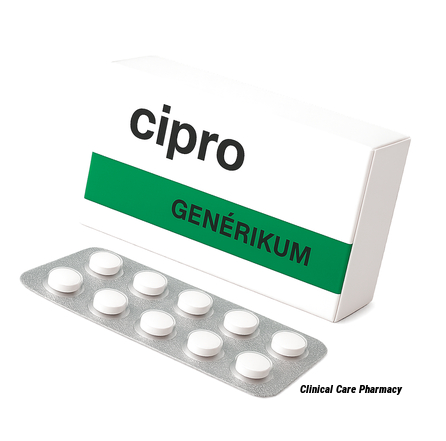
- Is Cipro available without prescription in the UK?
- What does Pharmacy medicine mean in the UK?
- General information about Cipro (ciprofloxacin)
- How Cipro works
- Price and availability information
- Strengths, formulations and pack types
- Infections treated by Cipro
- UK legal classification: POM, P and GSL
- Alternatives to Ciprofloxacin
- Cipro compared with other antibiotics
- Food, alcohol and lifestyle considerations
- Side effects and tolerability
- Long-term use and antibiotic resistance
- Warnings, contraindications and interactions
- Additional information about Cipro
Is Cipro available without prescription in the UK?
No. Ciprofloxacin (commonly called Cipro) is classified as a Prescription Only Medicine (POM) in the United Kingdom. It cannot be legally supplied without a prescription from a qualified healthcare professional. Any online pharmacy offering Cipro without prescription is operating outside MHRA regulations. Clinical Care Pharmacy requires a valid prescription or a completed online consultation with a UK-registered clinician before dispensing Cipro.
What does Pharmacy medicine mean in the UK?
The UK regulatory framework for human medicines divides products into three main categories: Prescription Only Medicine (POM), Pharmacy Medicine (P), and General Sales List (GSL) medicine. Pharmacy medicines (P) can be supplied without a prescription but only under the supervision of a pharmacist. They are not available for sale through general retail outlets. Cipro is not a Pharmacy medicine; it is a POM due to its risk profile and the need for professional oversight.
General information about Cipro (ciprofloxacin)
What is Cipro?
Ciprofloxacin is a broad-spectrum antibiotic belonging to the fluoroquinolone class. It works by inhibiting bacterial DNA gyrase and topoisomerase IV, enzymes essential for bacterial DNA replication, transcription, repair, and recombination. This makes it effective against a wide range of Gram-negative and some Gram-positive bacteria.
What is the active ingredient?
The active pharmaceutical ingredient is ciprofloxacin hydrochloride in most UK formulations. Generic Cipro contains the same active moiety and must meet regulatory quality, safety, and efficacy standards.
Why are some tablets film-coated?
Ciprofloxacin tablets often have a film coating to mask the bitter taste, protect the active substance from moisture, and ensure accurate dosing. The coating can also aid swallowing.
Is Cipro an antibiotic?
Yes. Ciprofloxacin is a synthetic antibiotic and one of the most commonly prescribed fluoroquinolones. It is not an antacid, PPI, or anti-inflammatory medicine.
Are there branded and generic versions?
Yes. Branded versions include Cipro, Ciproxin, and other trade names. Generic equivalents are available at cheaper prices, using the same active ingredient and therapeutic effect.
Why use generic Cipro?
Generic medicines can cost significantly less than branded products. They contain the same active ingredient, dosage strength, and must demonstrate bioequivalence to the branded reference medicine.
How Cipro works
What is the mechanism of action?
Ciprofloxacin targets bacterial DNA gyrase (topoisomerase II) and topoisomerase IV, inhibiting their activity. This leads to breaks in bacterial DNA and ultimately bacterial cell death. The action is bactericidal and concentration-dependent.
Does Cipro affect human cells?
At therapeutic doses, ciprofloxacin selectively targets bacterial enzyme systems. Human cells use different topoisomerases that are less susceptible to fluoroquinolones, but caution is warranted to minimise off-target effects.
How quickly does it work?
Clinical improvement can be seen within 48–72 hours depending on the infection site and severity. Pharmacokinetic properties, such as absorption, distribution, metabolism, and elimination, influence onset of action.
What is the half-life?
The elimination half-life is approximately 4 hours in healthy adults, with variability based on renal function. Dosing adjustments may be required in renal impairment.
Does food affect absorption?
Ciprofloxacin is best absorbed on an empty stomach. Concurrent intake with dairy products or calcium-fortified juice can reduce absorption by binding to the drug and forming insoluble complexes.
Price and availability information
How much does Cipro cost in the UK?
Prices vary by strength, pack size, brand vs generic, and pharmacy. Generic ciprofloxacin can be much cheaper than branded Cipro. For up-to-date pricing and stock availability, please contact Clinical Care Pharmacy in Derby.
Why do online prices vary?
Retailers set prices based on purchasing agreements, overhead costs, pack sizes, and promotions. Lower price does not imply inferior quality if supplied by a registered pharmacy.
| Example | Strength | Formulation | Price (GBP) | Status | Note |
|---|---|---|---|---|---|
| Generic Cipro | 250 mg | Film-coated tablet | £12.49 (28 tablets) | Prescription Only | Generic price example |
| Branded Cipro | 500 mg | Film-coated tablet | £22.99 (14 tablets) | Prescription Only | Branded price example |
Strengths, formulations and pack types
What strengths of ciprofloxacin exist?
Common strengths in the UK include 250 mg and 500 mg tablets. Intravenous formulations are also available for hospital use.
What formulations are available?
Oral: film-coated tablets and suspension. Intravenous: solution. The authorised formulations and excipients are specified in the product leaflet.
Why does pack size matter?
Pack size determines duration of therapy. Prescriptions typically cover 7–14 days, depending on infection type and severity. Over-ordering can raise concerns about misuse.
Are generics identical to branded products?
They contain the same active moiety and must meet bioequivalence standards. Differences may exist in tablet size, shape, colour, or inactive ingredients.
| Feature | Generic | Branded |
| Active ingredient | Ciprofloxacin | Ciprofloxacin |
| Price | Lower | Higher |
| Appearance | Varies by manufacturer | Consistent |
| Pack size | 28 tablets, 14 tablets | 14 tablets |
Infections treated by Cipro
Which infections can Cipro treat?
Ciprofloxacin is indicated for a range of serious bacterial infections:
- Urinary tract infections (UTIs), including pyelonephritis;
- Respiratory tract infections, such as pneumonia, bronchitis;
- Intra-abdominal infections in combination therapy;
- Skin and soft tissue infections;
- Bone and joint infections;
- Sexually transmitted infections (e.g., certain cases of gonorrhoea);
- Anthrax prophylaxis and treatment;
- Other serious Gram-negative infections.
When is Cipro not appropriate?
Not recommended for mild infections, viral infections, or infections caused by bacteria resistant to ciprofloxacin. Alternatives or culture-guided therapy may be needed.
Why follow culture and sensitivity?
To confirm the causative organism and its antibiotic susceptibility. Empirical therapy may start before results but should be adjusted based on lab data.
UK legal classification: POM, P and GSL
What is a POM?
A Prescription Only Medicine requires a valid prescription or prescriber directive. Cipro is POM due to serious infection risk and side effect profile.
What is a Pharmacy medicine?
Pharmacy medicines can be supplied under pharmacist supervision without prescription. Cipro is not classified as P.
What is a GSL medicine?
General Sales List medicines can be sold in non-pharmacy retail settings. Cipro is not a GSL medicine.
Can classification change?
Reclassification is possible via MHRA review but unlikely for antibiotics with resistance concerns and safety considerations.
Alternatives to Ciprofloxacin
What other antibiotic classes exist?
- Penicillins (e.g., amoxicillin);
- Cephalosporins (e.g., cefalexin);
- Macrolides (e.g., azithromycin);
- Tetracyclines (e.g., doxycycline);
- Trimethoprim-sulfamethoxazole;
- Other fluoroquinolones (e.g., levofloxacin);
- Aminoglycosides (e.g., gentamicin);
- Metronidazole for anaerobic infections.
Why choose an alternative?
To avoid resistance, allergies, or interactions. Choice depends on infection site, pathogen susceptibility, patient factors, and local guidelines.
Cipro compared with other antibiotics
How does Cipro compare with amoxicillin?
Ciprofloxacin has broader Gram-negative coverage and different mechanism. Amoxicillin covers many Gram-positive organisms and some Gram-negatives. Clinical choice depends on pathogen profile.
How does it compare with azithromycin?
Azithromycin is a macrolide with activity against atypical respiratory pathogens. Cipro is preferred for urinary and intra-abdominal infections. Side effect profiles also differ.
| Feature | Ciprofloxacin | Amoxicillin | Azithromycin |
| Class | Fluoroquinolone | Penicillin | Macrolide |
| Mechanism | DNA gyrase inhibition | Cell wall synthesis inhibition | Protein synthesis inhibition |
| Gram-negative | Excellent | Moderate | Poor |
| Gram-positive | Moderate | Excellent | Excellent |
| OTC availability UK | No (POM only) | No (POM only) | No (POM only) |
Food, alcohol and lifestyle considerations
Can diet influence Cipro effectiveness?
Dairy and calcium-rich foods can reduce absorption. Take Cipro at least 2 hours before or 4 hours after dairy products, calcium supplements, or antacids containing magnesium or aluminium.
Can alcohol affect Cipro?
Moderate alcohol use does not usually reduce antibiotic efficacy, but both can cause gastrointestinal upset or central nervous system effects. Avoid excessive alcohol during therapy.
Does smoking matter?
Smoking has no direct effect on Cipro absorption but can impair immune response to infection. Quitting smoking may improve recovery.
Hydration and activity
Ciprofloxacin can cause tendon irritation; maintain good hydration and avoid strenuous exercise to reduce tendon injury risk.
Side effects and tolerability
Can Cipro cause side effects?
Yes. Side effects range from common to rare. Always consult the patient information leaflet and seek medical advice if severe or persistent reactions occur.
| System | Possible effects |
| Gastrointestinal | Diarrhoea, nausea, vomiting, abdominal pain |
| Nervous system | Headache, dizziness, insomnia |
| Musculoskeletal | Tendon pain, muscle weakness |
| Skin | Rash, photosensitivity reactions |
| Psychiatric | Anxiety, confusion, rarely hallucinations |
| Allergic | Hypersensitivity reactions, anaphylaxis (rare) |
Why are tendon injuries important?
Fluoroquinolones can increase risk of tendonitis and tendon rupture, particularly in older patients and those on corticosteroids. Report any tendon pain immediately and discontinue drug.
Can allergic reactions occur?
Yes. Monitor for signs of severe hypersensitivity, such as facial swelling, difficulty breathing, or widespread rash, and seek immediate medical care.
Long-term use and antibiotic resistance
Why is Cipro intended for short courses?
Prolonged or repeated use increases the risk of bacterial resistance and adverse effects. Typical courses last 7–14 days, depending on indication.
How does resistance develop?
Bacteria can mutate target enzymes or increase efflux pumps. Misuse or incomplete courses promote resistant strains, reducing future treatment options.
What stewardship measures are recommended?
Use culture and sensitivity data, limit fluoroquinolone prescribing, complete full courses, and avoid use for mild or viral infections.
Warnings, contraindications and interactions
Who should be cautious with Cipro?
- Patients with a history of tendon disorders related to fluoroquinolones;
- Children and adolescents (risk of musculoskeletal effects);
- Pregnant or breastfeeding women;
- Patients with myasthenia gravis;
- Patients with QT prolongation or on QT-prolonging drugs;
- Patients with severe renal impairment (dose adjustment required);
- Those taking interacting medicines.
Can Cipro interact with other medicines?
Yes. Interactions can alter drug levels or toxicity. Notable examples:
- Antacids and sucralfate reduce absorption;
- Warfarin – increased bleeding risk;
- Theophylline – risk of toxicity;
- Clozapine – risk of seizure threshold lowering;
- Selective serotonin reuptake inhibitors (SSRIs) – risk of QT prolongation;
- Nonsteroidal anti-inflammatory drugs (NSAIDs) – increased CNS stimulation risk.
Why check renal function?
Ciprofloxacin is primarily renally excreted. Impaired clearance can lead to higher systemic exposure and increased adverse effect risk. Dosing adjustment may be necessary.
Additional information about Cipro
What does “generic ciprofloxacin” mean?
Generic medicines contain the same active ingredient and must meet bioequivalence standards. They may differ in inactive ingredients and appearance, but have identical therapeutic effects.
Why do product leaflets vary?
Different manufacturers may have specific excipients, presentation, and local authorisations that result in slight differences in patient leaflets and instructions.
How to verify UK medicine information?
Reliable sources include the MHRA website, the electronic Medicines Compendium (eMC), and qualified healthcare professionals.
Does this information replace pharmacist advice?
No. This page is published by Clinical Care Pharmacy, Unit 4 Brian Clough Business Centre, 200-222 Cotton Lane, Derby, for general information only. For personalised advice and to purchase Cipro (prescription required), please speak to our pharmacy team or your doctor.