
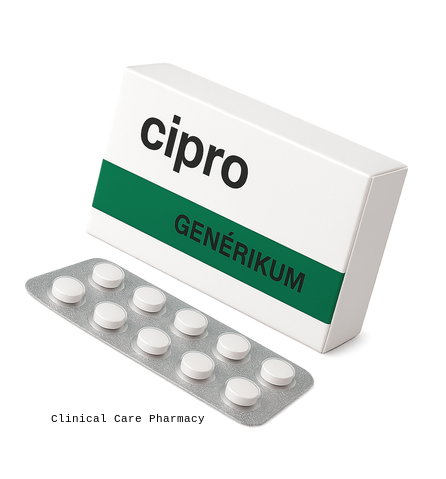
Buy cipro without prescription generic
- Is Cipro available without prescription in the UK?
- What does Pharmacy medicine mean in the UK?
- General information about Cipro
- How Cipro fights bacterial infections
- Price and availability information
- Strengths, formulations and pack types
- Common infections treated with Cipro
- UK legal classification: GSL, P and POM
- Alternatives to Cipro
- Cipro compared with other antibiotics
- Food, alcohol and lifestyle considerations
- Side effects and tolerability
- Long-term use and antibiotic resistance
- Warnings, contraindications and interactions
- Additional information about generic Cipro
Is Cipro available without prescription in the UK?
Ciprofloxacin, commonly known as Cipro, is classified as a Prescription Only Medicine (POM) in the United Kingdom. Under MHRA regulations, it cannot be legally supplied without a valid prescription issued by a qualified healthcare professional. However, some international online pharmacies offer generic Cipro without requiring a prescription, shipping directly to UK patients. This practice often exploits regulatory loopholes outside the UK jurisdiction. Clinical Care Pharmacy strongly recommends obtaining Cipro through a registered UK prescriber or via our online consultation service to ensure safety, authenticity, and legal compliance. By ordering generic Cipro without prescription from reputable sources, patients may risk counterfeit products, substandard quality, or inappropriate dosing. Always verify the pharmacy’s credentials, check patient reviews, and confirm product authenticity before purchasing.
Our service provides an online questionnaire reviewed by UK-registered pharmacists. If clinically appropriate, we issue a prescription and supply generic Cipro at the best price, offering genuine continuous support and professional guidance. While “Buy Cipro without prescription generic” is a popular search term for those seeking cheaper antibiotics without consulting a doctor, we emphasize the importance of safe, regulated access to avoid health risks and legal issues.
What does Pharmacy medicine mean in the UK?
The UK classifies medicines into three main categories: General Sales List (GSL), Pharmacy (P), and Prescription Only Medicine (POM). A Pharmacy medicine can be sold only in a registered pharmacy under the supervision of a pharmacist but does not require a prescription. Examples include certain cough remedies, emergency contraception, and antifungal creams. In contrast, POMs such as Cipro demand a prescription to ensure appropriate diagnosis, dosing, and monitoring. The rationale is that antibiotics carry risks of side effects, interactions, and the wider public health threat of antimicrobial resistance (AMR). Dispensing Cipro without professional oversight could lead to misuse, incomplete courses, or use for viral infections, all of which exacerbate resistance patterns.
When you search to “purchase Cipro without prescription,” it is vital to understand that legally, this term refers to services that facilitate prescription after remote assessment rather than truly over-the-counter supply. Clinical Care Pharmacy operates within MHRA guidelines, ensuring that even when ordering online, patients undergo a thorough review to validate the need and minimize resistance development.
General information about Cipro
What is Cipro?
Ciprofloxacin is a broad-spectrum antibiotic belonging to the fluoroquinolone class. It interferes with bacterial DNA replication by inhibiting type II topoisomerases (DNA gyrase and topoisomerase IV), enzymes essential for DNA transcription and cell division. Generic versions contain the same active ingredient, ciprofloxacin hydrochloride, at specified strengths. Our generic Cipro products are bioequivalent to brand names, meeting stringent quality and efficacy standards set by UK and international regulators.
Who should use Cipro?
Cipro is prescribed for various bacterial infections, including urinary tract infections (UTIs), respiratory tract infections, skin and soft tissue infections, gastrointestinal infections, and certain sexually transmitted infections. It is often reserved for cases where first-line antibiotics have failed, or where the suspected pathogens show resistance to other medicines. The choice of Cipro requires careful consideration of local resistance data and patient-specific factors such as age, renal function, and allergy history.
Why is generic Cipro cheaper?
When patents expire, multiple manufacturers can produce generic ciprofloxacin, driving competition and lowering prices. Generic manufacturers do not bear the initial research and development costs or extensive marketing budgets of the originator company. As long as they meet Good Manufacturing Practice (GMP) standards and demonstrate bioequivalence, they can offer Cipro at a fraction of branded costs. Clinical Care Pharmacy sources generic Cipro from certified EU and UK-based facilities, ensuring that affordability does not compromise quality.
What regulatory standards apply?
UK and EU regulations require that generic Cipro manufacturers submit bioequivalence data, stability studies, and complete documentation on manufacturing processes. MHRA inspects manufacturing sites and verifies compliance with GMP and pharmacovigilance requirements. Our pharmacy ensures that all generic Cipro products carry a valid UK marketing authorization or are imported under a Specials license when necessary, guaranteeing patient safety and traceability.
How Cipro fights bacterial infections
Mechanism of action
Ciprofloxacin targets bacterial DNA gyrase and topoisomerase IV, enzymes that manage DNA supercoiling and unlinking during replication. By stabilizing the DNA-enzyme complex after it cuts the DNA, Cipro prevents relegation of the DNA strands, leading to double-strand breaks and bacterial cell death. This bactericidal effect occurs in both dividing and non-dividing cells, making Cipro effective against a broad range of aerobic Gram-negative and some Gram-positive organisms.
Pharmacokinetics and absorption
After oral administration, ciprofloxacin is rapidly absorbed, with peak plasma concentrations reached within 1–2 hours. Bioavailability is approximately 70%, and absorption can be reduced by concurrent intake of multivalent cations found in antacids, sucralfate, iron, and zinc supplements. It distributes widely into body fluids and tissues, including the lungs, urinary tract, bones, and gastrointestinal tract, with a typical elimination half-life of 4–6 hours. Dose adjustments may be necessary for patients with impaired renal function, as 40–50% of ciprofloxacin is excreted unchanged in urine.
Dosage and administration
Standard adult dosing for uncomplicated UTIs is 250–500 mg twice daily for 3 days. More severe infections may require 500–750 mg twice daily for 7–14 days. For complicated infections, clinicians may extend therapy based on clinical response and microbiological results. It is critical to complete the full prescribed course, even if symptoms resolve earlier, to prevent relapse and resistance.
Does Cipro treat every bacterial infection?
No. Cipro’s spectrum does not reliably cover anaerobes or certain Gram-positive bacteria such as Enterococcus faecalis or methicillin-resistant Staphylococcus aureus (MRSA). Susceptibility testing guides appropriate use. Overuse or misuse can select for resistant strains, including Pseudomonas aeruginosa and extended-spectrum beta-lactamase (ESBL)-producing Enterobacterales.
Price and availability information
How much does generic Cipro cost online?
Prices vary by pack size, strength, and pharmacy. At Clinical Care Pharmacy, we offer generic Cipro 250 mg and 500 mg tablets in packs of 10, 20, or 30 at some of the lowest online prices in the UK. Our transparent pricing starts at £12.99 for a 10-tablet pack of 250 mg. Bulk discounts apply for larger quantities, and seasonal promotions may reduce prices further. For real-time pricing and stock status, please visit our product page or contact our pharmacy team directly.
Why prices vary between providers?
Variations reflect sourcing agreements, manufacturer discounts, and overhead costs. Some online pharmacies import from low-cost regions with reliable quality oversight, enabling cheaper offers. Others rely on domestic UK-licensed wholesalers. Always verify that the supplier holds MHRA approval or is registered with the General Pharmaceutical Council to ensure authenticity.
| Example | Strength | Formulation | Price (GBP) | Status | Note |
|---|---|---|---|---|---|
| Cipro-UK Brand | 500 mg | Film-coated tablet | £28.50 | POM | Pharmacy prescription required |
| Generic Cipro | 500 mg | Film-coated tablet | £14.99 | POM | Online consultation available |
| Generic Cipro | 250 mg | Film-coated tablet | £12.99 | POM | Minimum 10-tablet pack |
Strengths, formulations and pack types
What strengths of Cipro exist?
Ciprofloxacin is available in 250 mg and 500 mg film-coated tablets for oral administration, plus intravenous formulations of 200 mg/100 ml solution for infusion. Some manufacturers also market 750 mg tablets in limited markets. Oral suspension forms are less common and typically used in paediatric or dysphagic patients.
Why formulation matters
Film-coated tablets ensure stability and palatability. The coating masks the bitter taste and protects the active ingredient from moisture. Intravenous solutions require aseptic manufacturing and are administered in hospital settings for severe or systemic infections. Oral formulations are preferred for ambulatory care.
Pack size considerations
Regulatory approval often ties pack size to the recommended course length for specific indications. Packs of 10, 20, or 30 tablets correspond to 5- to 15-day courses at standard dosing. Larger packs are for extended therapy in chronic conditions or prophylaxis in high-risk patients under specialist supervision.
| Feature | Why it matters |
| Strength | Determines dose frequency and course duration |
| Formulation | Oral vs. intravenous affects bioavailability and setting |
| Pack size | Aligns with treatment guidelines and minimizes waste |
| Manufacturer | Impacts pricing, excipients, and packaging |
| Regulatory status | Ensures legal supply conditions |
Are generic and branded Cipro identical?
Generic Cipro tablets contain the same active ingredient and meet stringent bioequivalence standards. Excipients, tablet color, and branding differ, but therapeutic effect and safety profile are essentially identical when sourced from reliable manufacturers.
Common infections treated with Cipro
Urinary tract infections (UTIs)
Cipro is highly effective against Gram-negative uropathogens, including Escherichia coli and Klebsiella spp. It is indicated for complicated UTIs and pyelonephritis when first-line agents such as nitrofurantoin or trimethoprim are unsuitable due to resistance or intolerance.
Respiratory tract infections
Indicated for bronchitis, community-acquired pneumonia, and exacerbations of chronic obstructive pulmonary disease (COPD) when resistant pathogens or comorbidities necessitate broader coverage. Not first-line for uncomplicated acute bronchitis in otherwise healthy individuals.
Skin and soft tissue infections
Useful for diabetic foot infections, infected ulcers, and cellulitis caused by susceptible Gram-negative organisms. Often combined with additional agents to cover Gram-positive cocci in polymicrobial infections.
Gastrointestinal and intra-abdominal infections
Used in combination therapy for traveller’s diarrhoea, diverticulitis, and peritonitis. Ciprofloxacin’s penetration into gastrointestinal tissues makes it suitable for complex intra-abdominal cases alongside metronidazole.
Sexually transmitted infections (STIs)
Historically effective for uncomplicated gonorrhoea, but rising resistance has limited its use. Current guidelines often recommend third-generation cephalosporins instead.
UK legal classification: GSL, P and POM
What is a POM?
A Prescription Only Medicine can only be supplied against a valid prescription from a UK-registered prescriber. Cipro falls into this category due to its antimicrobial potency, resistance risk, and potential serious side effects.
What is a Pharmacy medicine?
Pharmacy medicines (P) can be sold without prescription under pharmacist supervision. These typically include treatments for minor ailments and simple infections but exclude antibiotics to prevent misuse and emergence of resistance.
What is a GSL medicine?
General Sales List medicines may be sold in non-pharmacy outlets. These include common analgesics and antacids but not antibiotics.
Is Cipro OTC in the UK?
No. Antibiotics are excluded from both GSL and P categories. They remain firmly POM to safeguard public health and antibiotic stewardship.
Why can the same active ingredient have different classifications?
Classification depends on indication, formulation, dose, and risk profile. For example, low-dose aspirin is GSL for minor pain but POM in higher doses for cardiac indications.
Who regulates medicine classification in the UK?
The Medicines and Healthcare products Regulatory Agency (MHRA) oversees classification, licensing, and pharmacovigilance. Reclassification processes involve expert committees and public health impact assessments.
Alternatives to Cipro
Other fluoroquinolones
- Levofloxacin;
- Moxifloxacin;
- Ofloxacin.
These share a similar mechanism but vary in spectrum, pharmacokinetics, and side-effect profiles. Choice depends on pathogen susceptibility and patient factors.
Beta-lactam antibiotics
- Amoxicillin;
- Co-amoxiclav;
- Cefalexin;
- Cephalosporins.
Often first-line for skin, respiratory, and urinary infections unless resistance patterns or allergies demand alternatives.
Trimethoprim and nitrofurantoin
First-choice agents for uncomplicated UTIs. Nitrofurantoin concentrates in urine and is generally well tolerated.
Macrolides
Erythromycin, clarithromycin, and azithromycin cover many respiratory pathogens and some atypical organisms. Useful in penicillin-allergic patients.
Why choose an alternative?
Stewardship principles favor narrow-spectrum agents where possible. Resistance profiles, allergy history, and side-effect risk guide antibiotic selection.
Cipro compared with other antibiotics
Cipro vs. levofloxacin
Levofloxacin is the L-isomer of ofloxacin, with once-daily dosing and enhanced Gram-positive coverage. Cipro requires twice-daily dosing and has superior activity against Pseudomonas aeruginosa.
Cipro vs. amoxicillin
Amoxicillin is a penicillin derivative with a narrower spectrum, primarily Gram-positive coverage. Cipro’s broad Gram-negative activity makes it suitable for complicated infections, while amoxicillin is first-line for many uncomplicated upper respiratory infections.
Cipro vs. azithromycin
Azithromycin has convenient once-daily dosing and a long half-life, but a narrower spectrum against Gram-negative organisms. It is preferred for atypical pneumonia and certain STIs.
| Feature | Ciprofloxacin | Levofloxacin | Amoxicillin | Azithromycin |
| Drug class | Fluoroquinolone | Fluoroquinolone | Beta-lactam | Macrolide |
| Gram-negative coverage | Excellent | Good | Poor | Poor |
| Gram-positive coverage | Moderate | Better | Excellent | Moderate |
| Dosage frequency | Twice daily | Once daily | Two/three times daily | Once daily |
| OTC availability | No | No | No | No |
Is one antibiotic always better?
No. The choice depends on the specific infection, local resistance patterns, patient allergies, drug interactions, and side-effect profiles. Antibiotic stewardship principles aim to use the narrowest effective agent for the shortest duration necessary.
Food, alcohol and lifestyle considerations
Can diet influence antibiotic absorption?
Ciprofloxacin absorption can be significantly reduced by calcium, magnesium, iron, and zinc in foods or supplements. Patients should avoid dairy products, antacids, or mineral supplements within 2 hours of dosing to ensure optimal bioavailability.
Can alcohol affect treatment?
Moderate alcohol consumption is unlikely to reduce Cipro efficacy, but excessive intake may increase side-effect risk, such as dizziness or gastrointestinal upset. Alcohol can also compromise the immune response and impede recovery.
Does smoking matter?
Smoking may delay healing of respiratory infections and exacerbate lung conditions. It does not directly interact with ciprofloxacin pharmacology but is discouraged for overall health and infection recovery.
Can body weight influence dosing?
Standard adult dosing covers a wide range of body weights. Dose adjustment is more pertinent for renal impairment than for extremes of body weight. In obese patients, clinical judgment and pharmacokinetic monitoring may guide adjustments.
Are there lifestyle tips during antibiotic therapy?
Drink plenty of fluids to maintain renal function and support excretion. Maintain a balanced diet to support immune function. Rest adequately and avoid strenuous exercise if tendon pain develops, as fluoroquinolones are associated with tendonitis and rare tendon rupture.
Side effects and tolerability
Can Cipro cause side effects?
Yes. Side effects range from common and mild to rare but serious. The Summary of Product Characteristics lists frequencies and details. Patients should report any unusual symptoms to their healthcare provider promptly.
| System | Examples |
| Gastrointestinal | Nausea, diarrhoea, abdominal pain, dyspepsia |
| Nervous system | Headache, dizziness, insomnia, confusion (rare) |
| Musculoskeletal | Tendon pain, arthralgia, myalgia, tendon rupture (rare) |
| Skin | Photosensitivity, rash, pruritus |
| Hypersensitivity | Angioedema, bronchospasm, anaphylaxis (rare) |
| Cardiac | QT prolongation (rare), palpitations |
Why does Cipro cause tendon issues?
Fluoroquinolones can affect collagen synthesis and tendon structure, particularly in the Achilles tendon. Risk factors include age over 60, concurrent corticosteroid therapy, and a history of tendon disorders. Patients should avoid sudden increases in physical activity and contact a clinician at first sign of tendon pain.
Are allergic reactions common?
Severe allergic reactions are rare but require immediate medical attention. Symptoms include facial swelling, difficulty breathing, and widespread rash. Treatment must be discontinued if hypersensitivity is suspected.
Why are product leaflets extensive?
Regulatory guidance requires listing all known or suspected adverse effects, categorized by frequency, to inform clinicians and patients. This transparency helps detect and manage safety signals and supports informed consent.
Long-term use and antibiotic resistance
Why is short-course therapy recommended?
Shorter antibiotic courses, when clinically appropriate, reduce the risk of developing resistance, minimize side effects, and improve adherence. Guidelines often recommend 3–7 days for uncomplicated infections, rather than the longer durations used historically.
What is antibiotic resistance?
Resistance occurs when bacteria evolve mechanisms to survive antibiotic exposure. Cipro resistance emerges via target modification, efflux pumps, and plasmid-mediated genes. Inappropriate use, such as incomplete courses or use for viral infections, accelerates resistance spread.
Can repeated courses cause cumulative resistance?
Yes. Repeated or prolonged exposure exerts selective pressure on bacterial populations. Clinicians must review antibiotic history and culture results before prescribing additional courses of Cipro.
Why is medicine review important?
Periodic review ensures antibiotics remain necessary, appropriate, and effective. It helps identify opportunities to de-escalate therapy, switch to narrower agents, or discontinue treatment if cultures show no significant pathogens.
Warnings, contraindications and interactions
Who should be cautious with Cipro?
- Patients with a history of tendon disorders;
- Older adults (≥60 years) or those on corticosteroids;
- Individuals with myasthenia gravis;
- Those with QT prolongation or heart rhythm abnormalities;
- Patients with severe hepatic or renal impairment;
- Pregnant or breastfeeding women, unless benefit outweighs risk.
Can Cipro interact with other medicines?
Yes. Clinically relevant interactions include:
- Antacids, sucralfate, iron and zinc supplements (reduced absorption);
- Warfarin and other vitamin K antagonists (increased anticoagulant effect);
- Antiarrhythmics (risk of QT prolongation);
- Non-steroidal anti-inflammatory drugs (risk of CNS stimulation and seizures);
- Caffeine (reduced clearance, increased stimulant effect).
Why is myasthenia gravis a contraindication?
Fluoroquinolones may exacerbate muscle weakness in myasthenia gravis, potentially precipitating myasthenic crises. Alternative antibiotics should be chosen for these patients.
Can Cipro affect liver enzymes?
Ciprofloxacin is metabolized partly via CYP1A2 and can inhibit this enzyme, affecting clearance of drugs like theophylline and caffeine. Dose adjustments may be necessary when co-administering CYP1A2 substrates.
What about pregnancy and breastfeeding?
Animal studies have shown cartilage damage in juvenile animals; human data are limited. Cipro is generally avoided in pregnancy and lactation unless no suitable alternatives exist and the benefits justify potential risks.
Additional information about generic Cipro
What does “generic Cipro” mean?
Generic ciprofloxacin contains the same active ingredient, dosage form, and strength as the branded reference medicine. It must demonstrate bioequivalence within defined regulatory margins. Excipient profiles may differ, but therapeutic outcomes are equivalent when sourced from reputable manufacturers.
Why can leaflets differ between products?
Each manufacturer submits its own product information based on approved indications, clinical data, and local regulations. Differences in excipients, pack sizes, and legal classifications can lead to variations in the leaflet content and presentation.
Where can UK medicine information be verified?
Reliable sources include the MHRA website, the electronic Medicines Compendium (eMC), and official Summary of Product Characteristics (SmPC) documents. Our pharmacists can also provide up-to-date information and personalized advice.
Does this information replace professional advice?
No. This article is for general guidance. For personalized recommendations, potential drug interactions, and clinical assessment, please consult a qualified healthcare professional or visit Clinical Care Pharmacy, Unit 4 Brian Clough Business Centre, 200-222 Cotton Lane, Derby.